


Always Free Delivery
Email:sales@petshopboss.com
Worldwide delivery
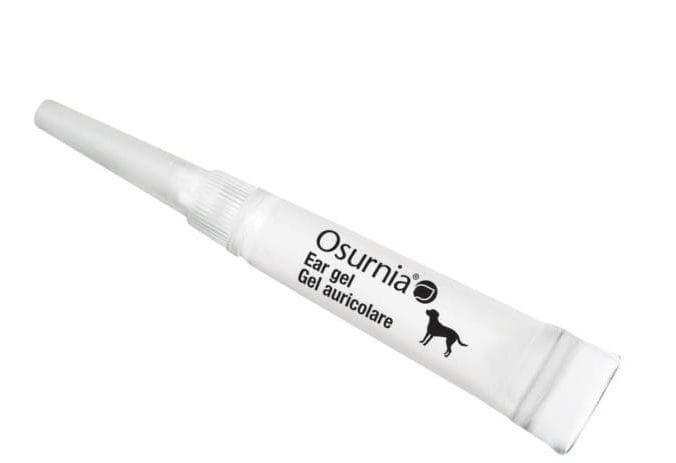
Osurnia Otic Gel (Florfenicol + Terbinafine + Betamethasone) – 2-Dose Ear Infection Treatment for Dogs | 1ml Tube
$22
Osurnia is a long-acting otic gel for dogs treating acute otitis externa caused by Staphylococcus pseudintermedius (bacteria) and Malassezia pachydermatis (yeast). Just 2 applications 7 days apart — no daily dosing. The gel coats and adheres to the ear canal for sustained drug delivery. Do not clean ears for 45 days after first dose. For dogs only — do not use in cats. Applied by a veterinarian.
41 people are viewing this product right now
🔥 9 items sold in last 3 hours
Hot Items
-

-
Original price was: $49.$29Current price is: $29.
-


What Is Osurnia Ear Gel?
Osurnia is a veterinary otic (ear) gel manufactured by Dechra Animal Health, combining three active substances in a unique sustained-release gel formulation for dogs:
- Florfenicol 10mg/ml — broad-spectrum bacteriostatic antibiotic
- Terbinafine 10mg/ml — allylamine antifungal with fungicidal activity
- Betamethasone acetate 1mg/ml — potent glucocorticosteroid anti-inflammatory
Each single-use tube contains 1ml of gel. The entire treatment course requires just two tube applications per affected ear, given 7 days apart — no daily dosing required.
For dogs only. Do not use in cats.
What Makes Osurnia Different: The Sustained-Release Gel Mechanism
Osurnia’s defining clinical advantage over conventional otic drops (Surolan, Easotic, Otomax) is its gel delivery system. Unlike liquid drops that run out of the ear canal within hours, Osurnia’s gel:
- Coats and adheres to the entire ear canal surface, including the horizontal canal, on contact
- Dissolves slowly in ear wax and is gradually eliminated by the ear’s natural mechanical clearing process over approximately 3 weeks per dose
- Maintains sustained drug concentrations at the infection site throughout the treatment period without requiring daily owner administration
This sustained-release mechanism means the full treatment course — two doses seven days apart — provides approximately 6 weeks of continuous antimicrobial and anti-inflammatory activity in the ear canal from just two clinic visits.
How Each Active Ingredient Works
Florfenicol (Antibiotic — Gram-Positive and Gram-Negative Spectrum)
Florfenicol is a bacteriostatic antibiotic that inhibits bacterial protein synthesis by binding to the 50S ribosomal subunit, blocking peptide chain elongation. It has a broad spectrum covering both Gram-positive and Gram-negative bacteria. In the context of canine otitis, its primary target is Staphylococcus pseudintermedius (MIC90 of 8µg/ml), the most common bacterial pathogen in canine ear infections. The very high concentration delivered topically (10mg/ml) far exceeds this MIC at the site of infection.
Terbinafine (Antifungal — Fungicidal, Not Fungistatic)
Terbinafine is an allylamine antifungal with fungicidal (kills fungi) rather than merely fungistatic (inhibits fungi) activity against Malassezia pachydermatis — the primary yeast cause of canine otitis externa. It acts by selectively inhibiting squalene epoxidase, an enzyme in the early stage of ergosterol synthesis. Blocking ergosterol synthesis causes squalene to accumulate within the fungal cell to toxic levels, killing the organism.
Key clinical advantage over azole antifungals: Terbinafine has a completely different mechanism from azole antifungals (miconazole in Surolan and Easotic, clotrimazole in Otomax). Because it targets a different enzyme in the ergosterol pathway, there is no cross-resistance between terbinafine and azole antifungals. If a Malassezia infection has failed or relapsed after azole-based treatments, Osurnia’s terbinafine may still be fully effective.
Betamethasone Acetate (Corticosteroid — Anti-Inflammatory)
Betamethasone acetate is a potent diester glucocorticosteroid that suppresses the inflammatory cascade in the ear canal — reducing the oedema, exudate, pruritus, and pain that accompany active otitis. Rapid symptom relief (reduced head shaking and scratching) is typically visible within 24–48 hours of the first application.
Systemically, absorption of betamethasone from Osurnia is low at the recommended dose, with plasma concentrations detected mainly in the first 2–4 days after application. However, prolonged or intensive use of topical corticosteroids can trigger systemic effects including adrenal suppression — the recommended two-dose course limits this risk.
Indications
- Acute otitis externa in dogs — caused by susceptible strains of Staphylococcus pseudintermedius and/or Malassezia pachydermatis
- Acute exacerbation of recurrent otitis externa — where recurring flare-ups require treatment
Osurnia is NOT effective against:
- Pseudomonas aeruginosa — in the Osurnia field study, all three dogs where Pseudomonas was the sole pathogen were treatment failures. Do not use Osurnia as first-line treatment where Pseudomonas infection is confirmed or strongly suspected; appropriate culture-guided therapy is required.
- Parasitic otitis (ear mites) — a separate acaricidal treatment must be implemented if ear mites are present
- Otitis media (middle ear infection) — Osurnia is for the external ear canal only
Dosage and Treatment Protocol
The Complete Osurnia Treatment Course: Just 2 Applications
| Application | Timing | Volume per Ear | Notes |
|---|---|---|---|
| Dose 1 | Day 1 (initial visit) | 1 full tube (1ml) | Applied after ear cleaning and drying |
| Dose 2 | Day 7 (return visit) | 1 full tube (1ml) | Do NOT clean ears between dose 1 and dose 2 |
Both ears affected: 2 tubes for dose 1 + 2 tubes for dose 2 = 4 tubes total. One ear affected: 1 tube per dose = 2 tubes total.
Step-by-Step Application (Performed by Veterinarian)
- Osurnia must be applied by a veterinary professional — this is not a take-home owner-applied product
- Examine the eardrum (tympanic membrane) before the first dose — use an otoscope to confirm the eardrum is intact
- Clean and thoroughly dry the external ear canal before the initial dose
- Wear eye protection — splatter can occur when the dog shakes its head post-application, causing ocular exposure (corneal ulcers have been reported in both dogs and humans)
- Open the tube by twisting the soft tip
- Insert the flexible tip into the affected ear canal and squeeze the entire tube contents into the ear
- Gently massage the base of the ear for 30–60 seconds to distribute gel into the horizontal canal
- Restrain the dog for 20–30 minutes after application to prevent head shaking from expelling the gel
⚠️ Critical: Do Not Clean the Ears for 45 Days After First Dose
After the first dose, do not clean the ear canal for 45 days. Ear cleaning between or after doses removes the gel from the ear canal and reduces drug contact time, directly compromising treatment effectiveness. This includes owner-applied ear cleaners. Routine ear hygiene must be suspended for the full 45-day post-treatment period.
If a second otic treatment is required after Osurnia, the ear should be cleaned before applying the new product.
⚠️ Critical Safety Warnings
Eardrum Perforation — Absolute Contraindication
Do not use Osurnia if the tympanic membrane (eardrum) is ruptured or suspected to be perforated. The veterinarian must confirm eardrum integrity by otoscopic examination before the first dose. Signs that may suggest perforation: head tilt, loss of balance, nystagmus, sudden apparent deafness. Post-approval experience has included cases of tympanic rupture — immediate discontinuation and veterinary assessment are required if this is suspected during the course.
Eye Protection — Mandatory During Application
Wear eye protection when administering Osurnia. If the dog shakes its head immediately after instillation, gel splatter can reach human and canine eyes. Eye injuries including corneal ulcers have been reported in both dogs and humans following Osurnia administration. Anyone near the dog during application should take steps to avoid ocular exposure.
Do Not Use in Cats
Osurnia is formulated and approved for dogs only. Do not use in cats or any other species.
Contraindications
- Known hypersensitivity to florfenicol, terbinafine, betamethasone, or any excipient
- Perforated or suspected perforated tympanic membrane — absolute contraindication
- Generalised demodicosis — do not use; the corticosteroid component may exacerbate generalised Demodex infestation
- Pregnant or breeding animals — safety not established
- Dogs under 2 months of age or weighing less than 1.4 kg — safety not established
- Cats and all other species
Side Effects
- Vomiting — most commonly reported adverse reaction in field study
- Increased liver enzymes — reported; monitor in dogs with pre-existing hepatic concerns
- Hearing loss / deafness — reported post-approval; discontinue and seek veterinary assessment immediately if any change in hearing is noted
- Ear discharge, ear irritation, and pain — reported post-approval
- Neurological signs: head shaking, head tilt, incoordination (ataxia), nystagmus — seek immediate veterinary assessment
- Ocular effects: corneal ulcer, keratoconjunctivitis sicca (KCS / dry eye) — from gel splatter or corticosteroid systemic absorption
- Facial paralysis — reported post-approval (rare)
- Adrenal suppression — with prolonged or intensive corticosteroid use; limiting treatment to two doses reduces this risk
Storage
⚠️ Refrigerate: Store at 2°C – 8°C (36°F – 46°F).
- Do not freeze
- Single-use tubes — discard each tube after use; do not store opened tubes
- Keep out of reach of children
- For otic (ear) use only — do not administer orally or by injection
Osurnia vs Surolan vs Easotic — Which Ear Treatment Is Right?
| Feature | Osurnia (Dechra) | Surolan (Elanco) | Easotic (Virbac) |
|---|---|---|---|
| Antibiotic | Florfenicol | Polymyxin B | Gentamicin |
| Antifungal | Terbinafine (allylamine) | Miconazole (azole) | Miconazole (azole) |
| Corticosteroid | Betamethasone acetate | Prednisolone acetate | Hydrocortisone aceponate |
| Formulation | Sustained-release gel | Liquid suspension (drops) | Liquid suspension (pump) |
| Dosing frequency | 2 applications total, 7 days apart | 5 drops twice daily | 1 pump once daily |
| Duration | 2 doses over 7 days | 7 days | 5 days |
| Applied by | Veterinarian only | Owner at home | Owner at home |
| Ear cleaning after | No cleaning for 45 days | Clean before each dose | Clean before first dose |
| Cross-resistance with azoles? | No (terbinafine ≠ azole) | N/A | N/A |
| Pseudomonas coverage | Unreliable — field study failures | Limited | Good (gentamicin) |
| Storage | Refrigerated (2–8°C) | Room temperature | Room temperature |
When to choose Osurnia: Owner compliance is a concern (twice-daily drops at home is difficult), the infection has relapsed after azole-based treatment, or convenience of clinic-administered treatment with no owner daily dosing is preferred.
When Osurnia may not be the best choice: Confirmed Pseudomonas infection (use gentamicin-based products), generalised demodicosis present, or the dog cannot visit the clinic twice.
Frequently Asked Questions
Why does Osurnia only need 2 doses?
Because the gel formulation is designed to dissolve slowly in ear wax and be gradually eliminated by the ear’s mechanical self-cleaning process over approximately 3 weeks. This sustained-release delivery maintains therapeutic drug concentrations at the infection site continuously without repeated dosing. Conventional liquid drops run out of the ear canal within hours of application and must be given repeatedly to maintain drug levels.
Why can’t the ears be cleaned for 45 days?
Ear cleaning physically removes the gel from the ear canal. If the gel is removed, the drug is removed — shortening contact time and reducing treatment effectiveness. The 45-day no-cleaning period covers both the 7-day inter-dose period (preserving dose 1 until dose 2 is given) and the post-treatment period while the second dose continues releasing drug. If the ear is cleaned before the 45 days, contact your vet — a third dose may be required.
Why must Osurnia be applied by a vet?
Osurnia’s label requires veterinary application for two important reasons: (1) the veterinarian must confirm the eardrum is intact before each dose using an otoscope — if the eardrum is ruptured, Osurnia must not be used; and (2) eye protection must be worn during application due to the risk of gel splatter causing corneal injury to humans or the dog. The vet also ensures complete gel delivery into the horizontal ear canal.
What if my dog’s ear infection comes back after Osurnia?
Recurrent otitis may indicate an underlying primary disease (atopic dermatitis, food allergy, hypothyroidism, ear conformation issues) that is perpetuating the infection. Recurrence after Osurnia warrants culture and sensitivity testing to identify the causative organism and its susceptibility, and a full investigation into the primary cause. If the recurrence involves Pseudomonas, Osurnia is not appropriate — discuss gentamicin-based or culture-directed treatment with your vet.
Is terbinafine in Osurnia different from the terbinafine tablets used for ringworm?
The active substance is the same compound, but Osurnia delivers it topically in the ear at 10mg/ml — much higher concentrations than are achievable systemically. The key clinical point is that terbinafine (allylamine class) targets a different enzyme in the ergosterol pathway than azole antifungals (miconazole, clotrimazole, fluconazole), so there is no cross-resistance. This makes it a useful option if a Malassezia infection has not responded to azole-based products.
Related products: Surolan Otic Suspension 15ml (Miconazole + Polymyxin B + Prednisolone) | Easotic Ear Drops 10ml (Gentamicin + Miconazole + HCA) | Epiotic Ear Cleaner 60ml
You must be logged in to post a review.

Reviews
There are no reviews yet.