




Always Free Delivery
Email:sales@petshopboss.com
Worldwide delivery
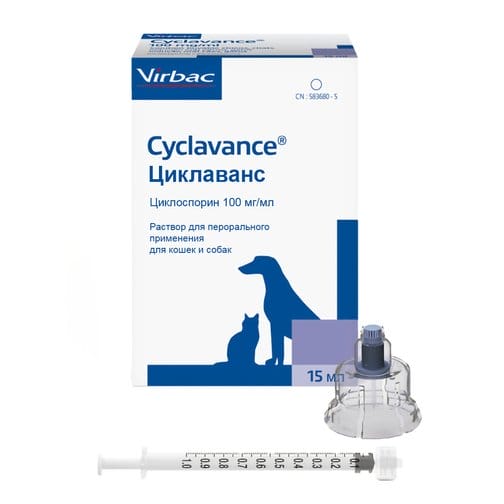
Cyclavance (Ciclosporin 100mg/ml) Oral Solution for Dogs & Cats – Steroid-Free Atopic Dermatitis Treatment | 15ml
$89
Cyclavance is a 100mg/ml ciclosporin oral solution by Virbac for the treatment of atopic dermatitis in dogs and chronic allergic dermatitis in cats. Steroid-free immunomodulator. Dogs: 5mg/kg daily initially; Cats: 7mg/kg daily initially. Give on an empty stomach (2 hours before or after food) for best absorption. Improvement expected in 4–8 weeks. Dose can be reduced to every other day or twice weekly once controlled. 6-month broached shelf life. Do not refrigerate.
| ACTIVE INGREDIENT | Ciclosporin |
|---|---|
| ANIMALS | Cats, Dogs |
| FORM | Suspension |
20 people are viewing this product right now
🔥 3 items sold in last 3 hours
Brand:


Your Payment is 100% Secure
SKU: CYCLAVANCE-100MG-ML-15ML
Categories: Other Cat Products, Other Dog Products
Tags: atopic dermatitis dogs treatment, ciclosporin dogs atopic dermatitis, cyclavance, cyclavance 100mg, cyclavance 15ml virbac, cyclavance cats, cyclavance cats chronic dermatitis, cyclavance dogs, cyclavance for cats, cyclavance for dogs, cyclavance oral solution for dogs, cyclavance virbac, cyclosporine dogs, steroid free dog allergy treatment, virbac hypoallergy
Estimated delivery:10 - 17 days
Hot Items
-
-
-
Original price was: $49.$29Current price is: $29.


What Is Cyclavance?
Cyclavance is a 100mg/ml ciclosporin oral solution manufactured by Virbac, formulated for the long-term management of allergic skin disease in dogs and cats. It is available in 15ml and 50ml bottles, each supplied with a luer-lock syringe and adaptor cap for accurate, leak-free dosing to the nearest kilogram of body weight.
Cyclavance is a steroid-free immunomodulator — it controls the allergic immune response without the adrenal suppression, Cushing’s-like side effects, or long-term organ risks associated with prolonged corticosteroid use. It is recommended by the International Committee on Allergic Diseases of Animals (ICADA) as a first-line treatment option for chronic atopic dermatitis in dogs.
Indications
- Dogs: Treatment of chronic manifestations of atopic dermatitis — the most common allergic skin disease in dogs, caused by hypersensitivity to environmental allergens such as house dust mites, pollens, moulds, and storage mites
- Cats: Symptomatic treatment of chronic allergic dermatitis — including feline atopic skin syndrome and allergic manifestations such as miliary dermatitis, eosinophilic plaques, and self-induced alopecia from allergic overgrooming
How Cyclavance Works: Calcineurin Inhibition — Not Steroids
Ciclosporin is a calcineurin inhibitor. Calcineurin is an enzyme inside T-lymphocytes (the immune cells that drive the allergic response) that activates the production of interleukin-2 (IL-2) and other pro-inflammatory cytokines. In atopic dermatitis, T-cells respond excessively to harmless allergens, triggering chronic inflammation, barrier damage, and the intense itch-scratch cycle that makes the condition so distressing.
Ciclosporin selectively blocks calcineurin — preventing T-cell activation and IL-2 production — dampening the overactive immune response at its source. The result is reduced inflammation, reduced itch, and improved skin barrier function.
Crucially, ciclosporin acts selectively on T-lymphocytes rather than suppressing the entire immune system or the adrenal axis the way corticosteroids do. This selectivity explains why Cyclavance does not cause the weight gain, muscle wasting, polyuria/polydipsia, skin thinning, and adrenal suppression that chronic steroid use produces. The skin concentration of ciclosporin after oral dosing is up to 10 times higher than blood concentration, ensuring therapeutic levels exactly where they are needed.
⚠️ Critical: Food Timing Rule
This is the most important practical instruction for Cyclavance and the one most commonly missed. Cyclavance should be given on an empty stomach — at least 2 hours before or 2 hours after feeding.
Why this matters: ciclosporin is a lipophilic molecule and its absorption is affected by food. Clinical pharmacokinetic data show that bioavailability is both higher and less variable between individuals when ciclosporin is given to fasted animals compared to animals fed at the same time. Giving Cyclavance with a full meal reduces absorption and introduces inconsistency in how much drug reaches the bloodstream from dose to dose.
If your pet consistently refuses to take the medication away from food, it can be given with a small amount of food to ensure the full dose is consumed — but the key principle is consistency: always give it the same way every day. What must be avoided is inconsistent administration (sometimes fasted, sometimes with a full meal), as this creates unpredictable drug levels.
Dosage
Dogs — 5mg/kg body weight, once daily initially
At 100mg/ml concentration, this equates to 0.05ml per kg body weight per day.
| Dog Weight (kg) | Daily Dose (ml) | Dog Weight (kg) | Daily Dose (ml) |
|---|---|---|---|
| 2 kg | 0.10 ml | 16 kg | 0.80 ml |
| 3 kg | 0.15 ml | 17 kg | 0.85 ml |
| 4 kg | 0.20 ml | 18 kg | 0.90 ml |
| 5 kg | 0.25 ml | 19 kg | 0.95 ml |
| 6 kg | 0.30 ml | 20 kg | 1.00 ml |
| 7 kg | 0.35 ml | 22 kg | 1.10 ml |
| 8 kg | 0.40 ml | 24 kg | 1.20 ml |
| 9 kg | 0.45 ml | 26 kg | 1.30 ml |
| 10 kg | 0.50 ml | 28 kg | 1.40 ml |
| 12 kg | 0.60 ml | 30 kg | 1.50 ml |
| 14 kg | 0.70 ml | 35 kg | 1.75 ml |
| 15 kg | 0.75 ml | 40 kg | 2.00 ml |
Cats — 7mg/kg body weight, once daily initially
| Cat Weight (kg) | Daily Dose (ml) | Cat Weight (kg) | Daily Dose (ml) |
|---|---|---|---|
| 2.1 kg | 0.15 ml | 7.1 kg | 0.50 ml |
| 2.9 kg | 0.20 ml | 7.9 kg | 0.55 ml |
| 3.6 kg | 0.25 ml | 8.6 kg | 0.60 ml |
| 4.3 kg | 0.30 ml | 9.3 kg | 0.65 ml |
| 5.0 kg | 0.35 ml | 10.0 kg | 0.70 ml |
| 5.7 kg | 0.40 ml | 11.4 kg | 0.80 ml |
| 6.4 kg | 0.45 ml | 14.3 kg | 1.00 ml |
The Treatment Pathway: From Daily to Maintenance
One of Cyclavance’s key clinical advantages is that once atopic dermatitis is controlled, the dosing frequency can be reduced substantially — significantly lowering long-term cost and the volume of solution consumed.
Phase 1: Daily Dosing (typically the first 30 days)
Give Cyclavance once daily at the weight-appropriate dose. This induction phase builds up skin ciclosporin concentrations and begins modulating the immune response. Most dogs show clinically significant improvement within 4–8 weeks, though some respond sooner, particularly if concurrent antihistamines or short-course corticosteroids are used in the first 2–4 weeks to control itch while ciclosporin takes effect.
Phase 2: Alternate-Day Dosing (once signs are controlled)
Once atopic dermatitis is satisfactorily controlled, reduce to every other day. This is the most common long-term maintenance frequency. Ciclosporin’s high skin concentrations (10x blood levels) and average half-life of 8–11 hours support continued efficacy with every-other-day dosing.
Phase 3: Twice-Weekly Dosing (minimum effective maintenance)
Some dogs are well-controlled on as little as twice weekly. Your veterinarian will guide this tapering based on the dog’s clinical response. If signs return, increase frequency back to every other day or daily. Always make dose frequency adjustments in consultation with your vet.
How Long Does the 15ml Bottle Last?
At the initial daily dose (Phase 1):
| Dog Weight | Daily Volume | 15ml Bottle (daily) | 15ml Bottle (every other day) |
|---|---|---|---|
| 5 kg | 0.25 ml | ~60 days | ~120 days |
| 8 kg | 0.40 ml | ~37 days | ~75 days |
| 10 kg | 0.50 ml | ~30 days | ~60 days |
| 15 kg | 0.75 ml | ~20 days | ~40 days |
| 20 kg | 1.00 ml | ~15 days | ~30 days |
| 25 kg | 1.25 ml | ~12 days | ~24 days |
| 30 kg | 1.50 ml | ~10 days | ~20 days |
The 15ml bottle covers the full 30-day initial daily phase for dogs up to approximately 10kg. Dogs over 10kg will need multiple 15ml bottles for the initial phase, or may prefer the 50ml size for better economy during long-term maintenance.
When to Expect Results
- Within 1–2 weeks: Some reduction in itch may begin as ciclosporin blood levels build up
- 4–8 weeks: Clinically significant improvement in itch score and skin lesions in the majority of responding dogs
- 8–16 weeks: Maximum therapeutic benefit achieved with consistent daily dosing
If no improvement is seen after 8 weeks of correct daily administration, reassessment by your veterinarian is recommended — consider whether concurrent factors (food allergy component, secondary infections, ectoparasites) are limiting response.
How to Administer Cyclavance
- Wait 2 hours after the last meal (or plan to wait 2 hours before the next meal) before administering
- Insert the adaptor cap into the bottle top
- Attach the luer-lock syringe to the adaptor cap
- Invert the bottle and draw up the correct volume for your pet’s weight
- Administer directly into the mouth (alongside the tongue, aiming for the cheek pouch) or over a small amount of food if needed for acceptance
- Replace the cap securely after each use
Storage — Important: Do Not Refrigerate
Store at room temperature between 15°C and 25°C. Do not refrigerate.
- If stored below 15°C, Cyclavance may form a thick, jelly-like or lumpy consistency — this is a reversible physical change and does not affect product quality. Allow the bottle to warm to room temperature and the solution will return to normal. Do not force administration if the solution appears gel-like.
- After first opening: use within 6 months (EU formulation). Note date of opening on the bottle.
- Keep in original packaging, away from light
- Keep out of reach of children
Contraindications
- History of malignant tumours (cancer) — ciclosporin inhibits T-lymphocytes, which are part of anti-tumour immune surveillance. While ciclosporin does not induce tumours, it may allow pre-existing or developing tumours to progress more rapidly by reducing immune control. Do not use in any animal with a history of cancer or an active malignancy.
- Hypersensitivity to ciclosporin or any excipient
- Live vaccines — do not vaccinate with live vaccines during treatment or within 2 weeks before or after Cyclavance. Inactivated (killed) vaccines may be used but vaccine efficacy may be reduced during immunosuppressive therapy.
- Dogs under 6 months of age or under 2kg
- Cats with FeLV (Feline Leukaemia Virus) or FIV (Feline Immunodeficiency Virus) — immunosuppression in immunocompromised cats with retroviral infection risks serious infectious complications
Drug Interactions
| Drug | Interaction | Clinical Note |
|---|---|---|
| Azole antifungals (ketoconazole, itraconazole, fluconazole) | Inhibit CYP3A4 in the liver — significantly increase ciclosporin blood levels | Ketoconazole is sometimes used intentionally to reduce the ciclosporin dose needed (dose-sparing strategy) under vet supervision; unintended co-prescription risks toxicity |
| Macrolide antibiotics (erythromycin, clarithromycin) | CYP3A4 inhibition; increase ciclosporin levels | Monitor closely; consider dose reduction |
| Rifampicin, phenobarbital, phenytoin | CYP3A4 inducers — accelerate ciclosporin metabolism; reduce blood levels | Higher ciclosporin doses may be needed; monitor clinical response |
| Other immunosuppressants (prednisolone, azathioprine) | Additive immunosuppression | Short-course prednisolone overlap during induction is sometimes used; long-term combined immunosuppression increases infection and malignancy risk |
| NSAIDs (meloxicam) | Both drugs have potential nephrotoxic effects at high doses | Use with caution in dogs with renal insufficiency; monitor renal function |
Side Effects
Dogs (uncommon to rare at label doses)
- Gastrointestinal: vomiting, soft stools, diarrhoea — most commonly reported; usually mild and transient; can be reduced by dividing the dose or giving with a small amount of food if severe
- Gingival hyperplasia — gum overgrowth with prolonged use; regular dental checks advised
- Verruciform (wart-like) skin lesions — papilloma virus can proliferate under localised immune suppression
- Coat changes: excessive hair growth (hypertrichosis) or coat texture changes
- Redness and swelling of the ear pinnae
- Lethargy or hyperactivity (rare)
- Diabetes mellitus — very rare; particularly reported in West Highland White Terriers. Monitor for signs of diabetes (PU/PD, weight loss) in WHWTs on long-term therapy.
Cats (common)
- GI disturbances (vomiting, diarrhoea, weight loss) — more common than in dogs; may require dose adjustment
- Lethargy, anorexia, hypersalivation
- Polydipsia, gingival hyperplasia, lymphopenia
Cyclavance vs Atopica — Is There a Difference?
| Feature | Cyclavance (Virbac) | Atopica (Elanco) |
|---|---|---|
| Active ingredient | Ciclosporin 100mg/ml | Ciclosporin 100mg/ml (solution) or soft capsules |
| Formulation | Oral solution | Oral solution or soft gel capsules |
| Dosing accuracy | Liquid allows kg-precise dosing | Capsules: dose steps fixed by capsule size (±29–33% variance from ideal); solution: same accuracy as Cyclavance |
| Palatability | Designed for direct oral or food administration; clinical studies show high voluntary acceptance | Capsule form can be difficult to administer long-term |
| Broached shelf life | 6 months | Varies by formulation |
| Mechanism | Identical — calcineurin inhibition | Identical |
| Clinical efficacy | Equivalent at the same mg/kg dose | Equivalent at the same mg/kg dose |
Cyclavance liquid solution allows precise dosing to the exact kilogram with no rounding errors — a published study comparing Cyclavance liquid to ciclosporin capsules found 99.3% of liquid doses fell within the correct range, versus significant under- and over-dosing with fixed-size capsules (variance of −29% to +33% from the ideal dose).
Frequently Asked Questions
Can Cyclavance be used alongside antihistamines or steroids?
Short-term concurrent corticosteroids are sometimes prescribed during the first 2–4 weeks of Cyclavance to control severe itch while ciclosporin builds to therapeutic levels — this is an accepted practice discussed with your vet. Long-term combined immunosuppression should be avoided. Antihistamines can generally be used concurrently without interaction, though their efficacy for canine atopic dermatitis as sole agents is limited.
My dog’s bottle went lumpy/jelly-like — is it ruined?
No. Cyclavance can form a gel-like or lumpy consistency when stored below 15°C (e.g. if left in a cold room or accidentally refrigerated). This is a reversible physical change that does not affect the quality or efficacy of the product. Allow the bottle to warm to room temperature (15–25°C) and the solution will return to its normal consistency. Do not attempt to administer when in gel form.
How long does Cyclavance for dogs take to work?
Most dogs show meaningful improvement within 4–8 weeks of daily dosing. Some dogs respond earlier — within 2–3 weeks — particularly if secondary skin infections have been treated concurrently. Full maximum benefit typically takes 8–16 weeks of consistent daily dosing. If no improvement is seen after 8 weeks on the correct dose given correctly (fasted), reassess diagnosis and rule out complicating factors with your vet.
Can my cat take Cyclavance if they have FIV?
No. Cyclavance is contraindicated in cats infected with FeLV or FIV. Immunosuppression in cats with pre-existing retroviral infection significantly increases the risk of opportunistic infections and may allow the underlying viral disease to progress. An alternative immunomodulating approach appropriate for FIV-positive cats should be discussed with your veterinarian.
Is Cyclavance safe to use long-term?
Ciclosporin has over 10 years of safety data in dogs with atopic dermatitis and is considered one of the safest long-term options for this condition. It does not cause adrenal suppression, does not require abrupt tapering, and does not produce the Cushing’s-like effects of prolonged steroids. Regular veterinary check-ups (every 6–12 months in stable cases) and basic monitoring (checking for signs of infection, dental health, and lymph node changes) are recommended for animals on long-term therapy.
Related products: Apoquel (Oclacitinib) Tablets – Alternative JAK inhibitor for canine itch | Prednisolone 5mg Tablets – Short-course steroid for itch bridging | Allermyl Shampoo – Dermatological support for atopic dogs
You must be logged in to post a review.



Reviews
There are no reviews yet.